









Video Sources 0 Views
Synopsis
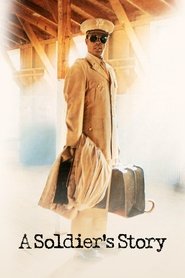
Watch: A Soldier’s Story 1984 123movies, Full Movie Online – A black soldier is killed while returning to his base in the deep south. The white people of the area are suspected at first. A tough black army attorney is brought in to find out the truth. We find out a bit more about the dead soldier in flashbacks – and that he was unpopular. Will the attorney find the killer ?.
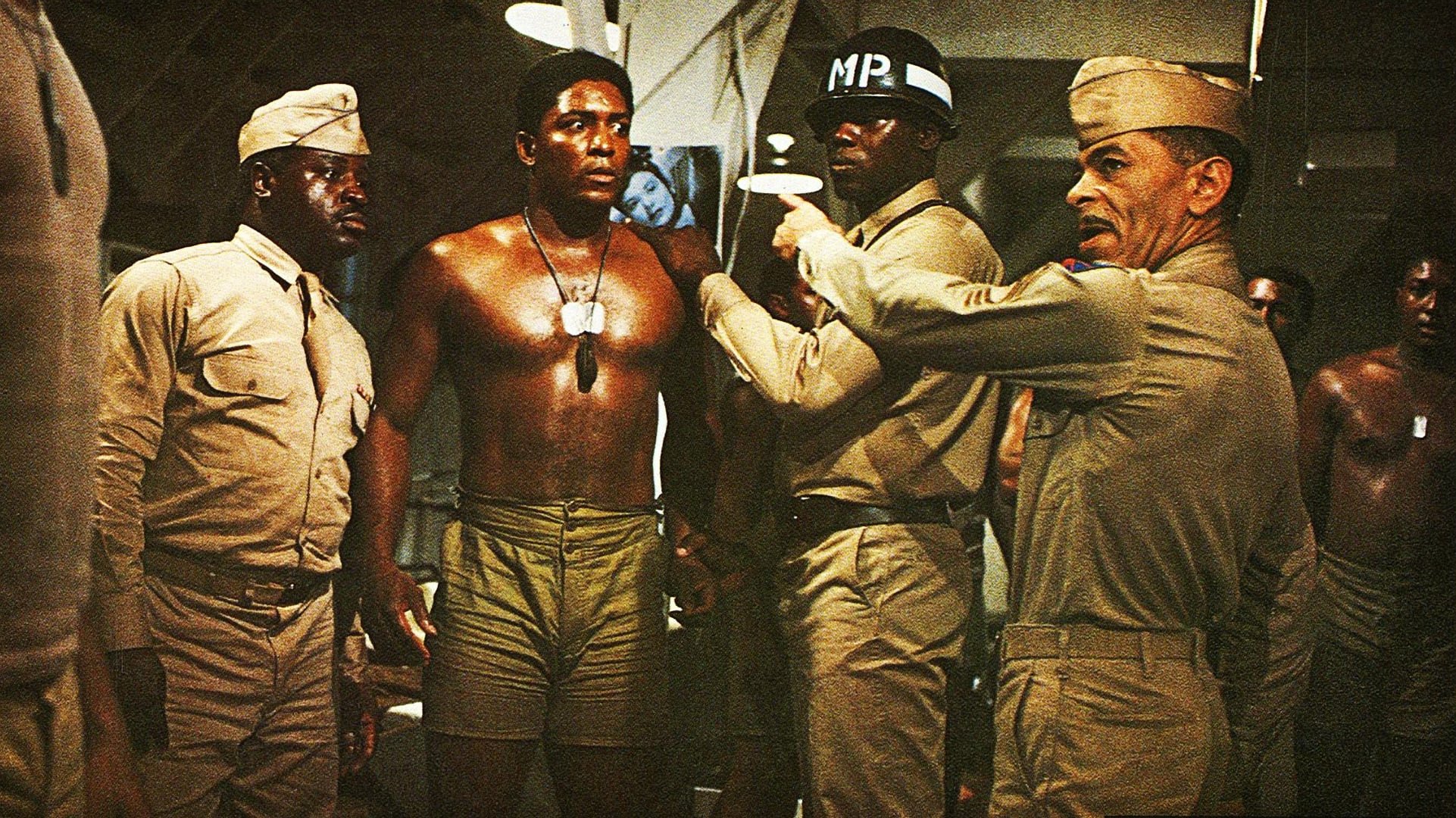
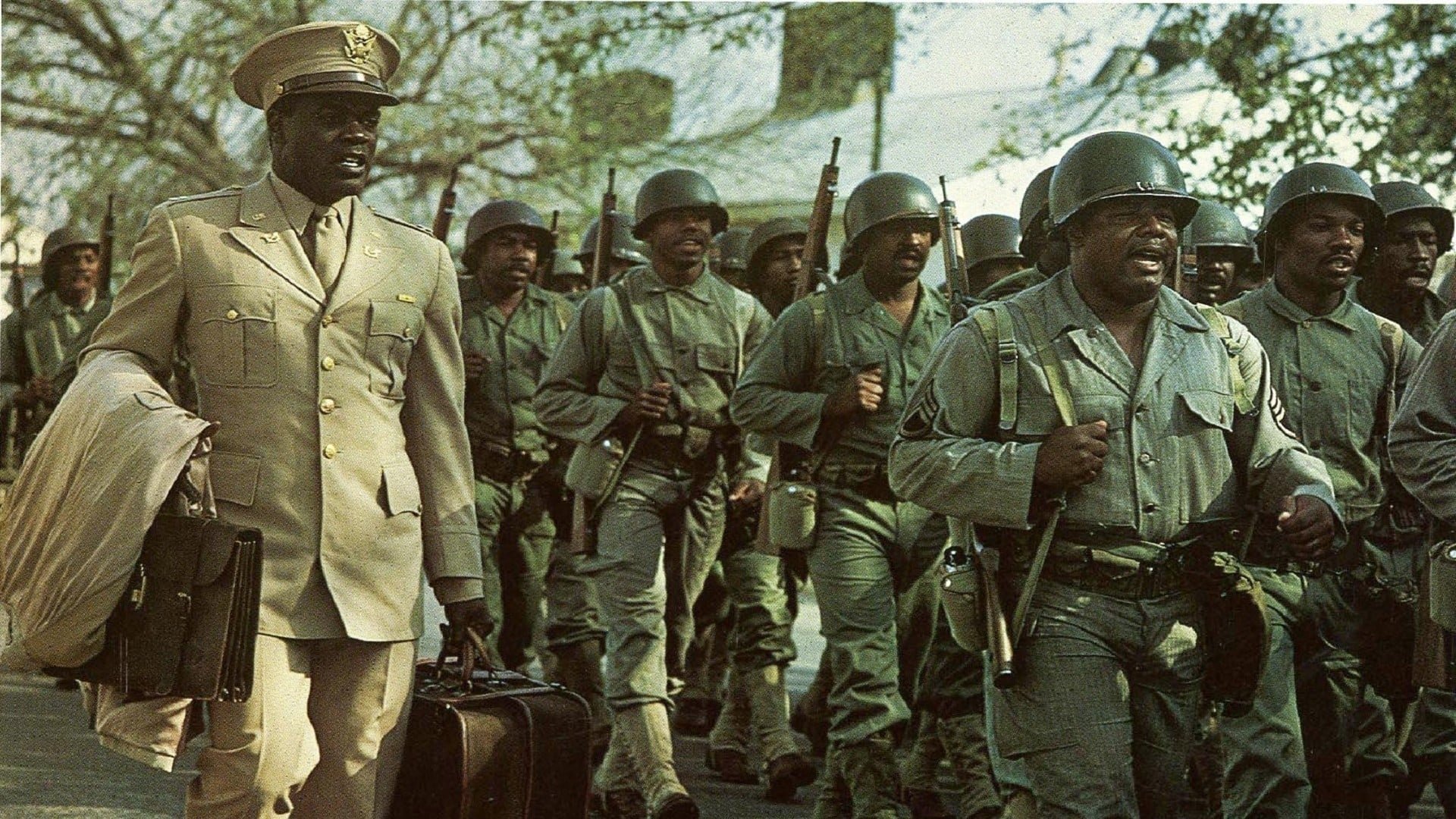
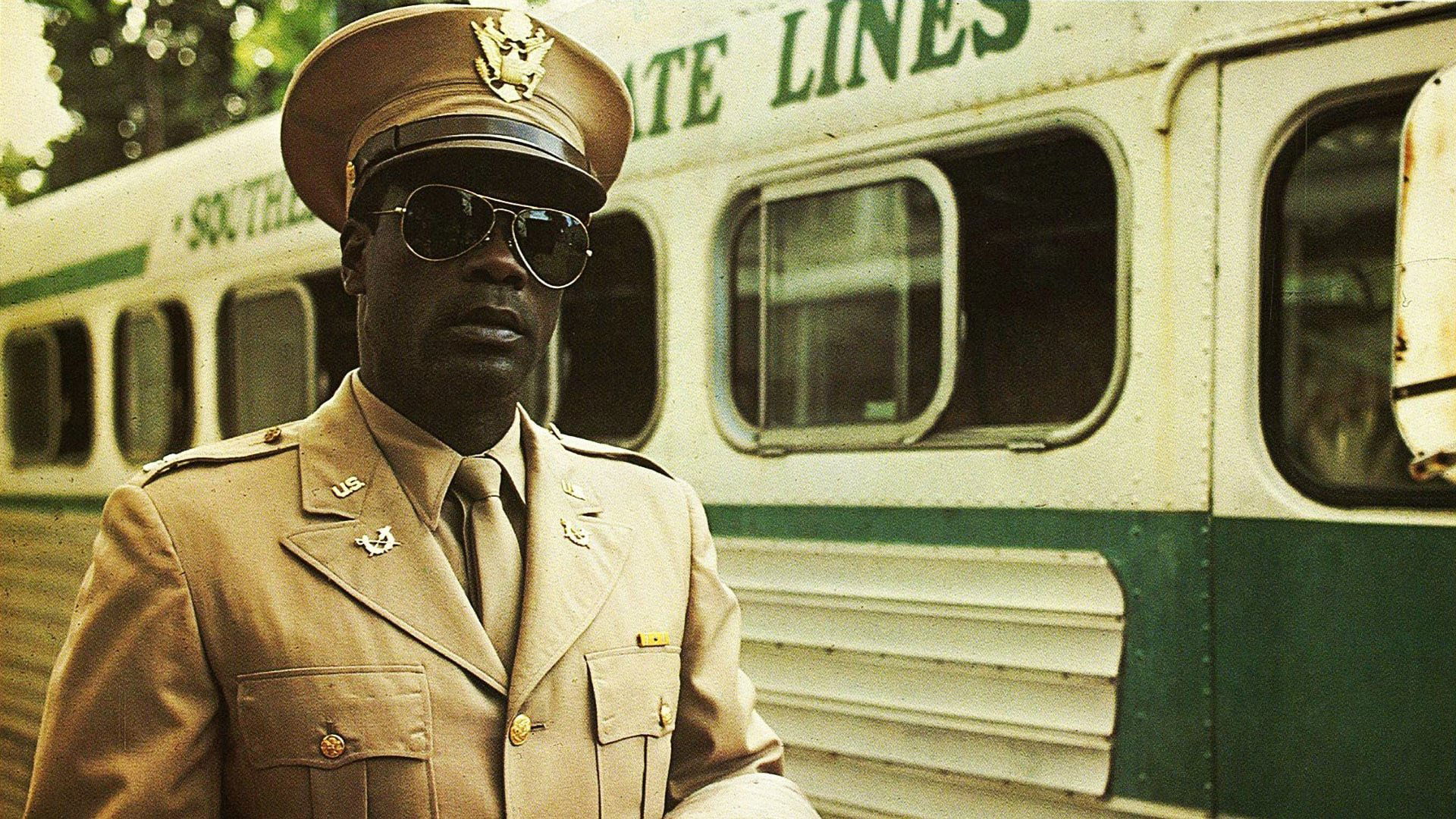
Plot: In a rural town in Louisiana, a black Master Sergeant is found shot to death just outside the local Army Base. Military lawyer, Captain Davenport—also a black man—is sent from Washington to conduct an investigation. Facing an uncooperative chain of command and fearful black troops, Davenport must battle with deceit and prejudice in order to find out exactly who really did kill the Master Sergeant.
Smart Tags: #based_on_play #timeframe_1940s #screenplay_adapted_by_author #soldier #flashback #military_lawyer #captain #african_american #civil_rights #racial_discrimination #race_relations #racial_tension #racist #fistfight #apostrophe_in_title #three_word_title #revenge #revenge_killing #homicide_investigation #male_tears #shot_in_the_chest
Find Alternative – A Soldier’s Story 1984, Streaming Links:
123movies | FMmovies | Putlocker | GoMovies | SolarMovie | Soap2day
Ratings:
 |  7.2/10 Votes: 10,379 |
 | 92% | RottenTomatoes |
 | 66/100 | MetaCritic |
 | N/A Votes: 134 Popularity: 6.344 | TMDB |
Reviews:
A Soldier’s Story — A Compelling One Indeed
Who murdered Sgt. Waters? This is the mystery posed at the outset of “A Soldier’s Story,” as we see Waters-speaking incoherently and obviously intoxicated-being shot to death on a country road. The setting is Tynin, Louisiana, and the year is 1944, near the end of WWII. Tynin, like the rest of the Deep South, is a town plagued by racial segregation and Klan terrorism. That said, everyone on the Tynin army base, both black and white, has no doubt that the black sergeant’s killing was at the hands of white racists, some are even certain that it was the work of the KKK.Enter Capt. Davenport, a Negro army officer/lawyer assigned by Washington to investigate Waters’ killing. No stranger to racial hostility himself, he perceives himself as a crusader, out to see that justice-ultimately racial justice–is served for the murder. However, he has the unfortunate experience of learning that internal black racism can be just as hostile and damaging as the external racism historically afflicted by white society.
Howard Rollins plays Capt. Davenport, the no nonsense, stoic black army officer investigating Waters’ murder, and Dennis Lipscomb plays Captain Taylor, the late Waters’ white commanding officer, who, like Davenport, desperately wants Waters’ killers prosecuted. However, Taylor earnestly tries to persuade Davenport to relinquish the investigation, believing that as a black man, there’s no way that Davenport can possibly “get at the truth” behind the killing.
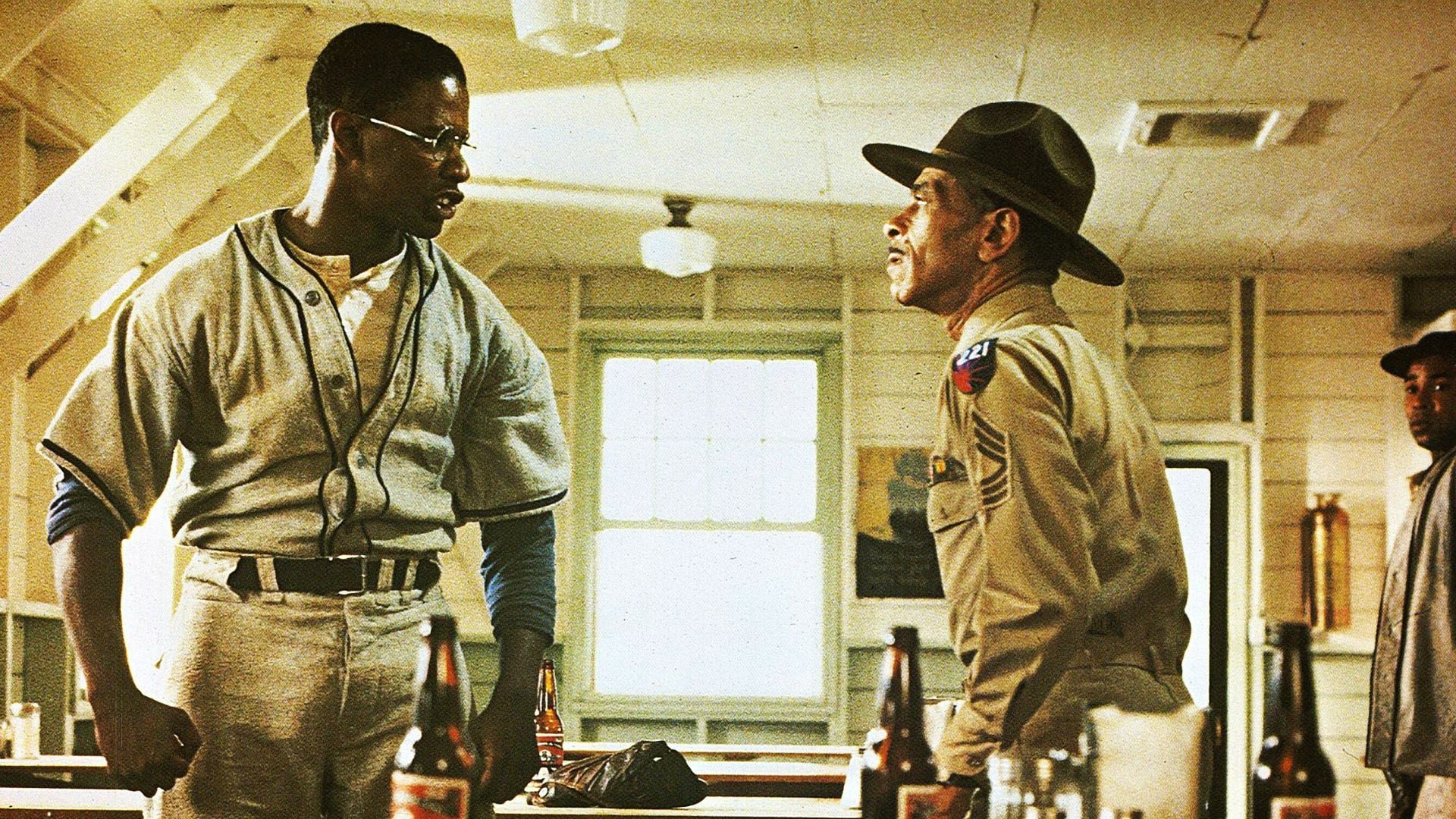
But it is Adolph Caesar who commands most of your attention throughout this movie in the role of the sadistic Sgt. Vernon Waters. The mystery of Sgt. Waters’ murder is the focal point of “A Soldier’s Story,” and, fittingly, Caesar is “the man” of this movie. Through a series of film flashbacks of Waters, via Davenport’s interviews with black soldiers of Waters’ platoon and Captain Taylor, we learn that Waters was an intensely embittered, disillusioned black master sergeant who believed that Southern blacks, perpetuating stereotypes of minstrelsy and ignorance, impede the black race from attaining acceptance and respect from white society. That said, he embarks on his own personal crusade to rid the black race of such dregs so that the race can prosper and progress.
With his raspy, deep voice, Caesar spent most of his career doing narrations for Hollywood productions. (While hearing him deliver his lines in this movie, and if you’re over 45, you can’t help but to reminisce about the classic tag line he delivered in TV commercials for the United Negro College Fund way back in the day-“A mind is a terrible thing to waste.”) But it is in this role as Sgt. Waters in “A Soldier’s Story” that Caesar displays his powerful talent as a dramatic actor, in a role that would eventually become his signature. It is with his penetrating voice that he effectively embodies the hatred and bitterness that personifies the Waters’ character. Although small in stature, his screen presence is commanding, and at times even chilling, particularly when he vents his animosity and sadism toward the Southern Negroes of his platoon, whom he deprecatingly refers to as “geeches.” It is a hatred so intense that as Pvt. Wilke (Water’s subordinate) explains to Davenport, “You could just feel it.” Caesar would go on to win a well-deserved Academy Award nomination for “Best Supporting Actor” for his portrayal of Sgt. Waters in “A Soldier’s Story,” a performance that would make him a star overnight. Unfortunately, he would suffer an untimely death two years after the movie was released, just as he was coming into his own as a Hollywood celebrity.
In what was only his second appearance in a Hollywood movie, Denzel Washington delivers a solid performance as “Pvt. Peterson,” the outspoken and assertive soldier from Alabama, totally unafraid to challenge Waters’ bigotry toward the Southern black soldiers. In stark contrast to Peterson, veteran actor Art Evans plays Pvt. Wilkie, Waters’ docile and acquiescent flunky, who, in an effort to regain his rank of sergeant, a rank Waters had stripped, is more than willing to facilitate the sergeant’s dastardly deeds.
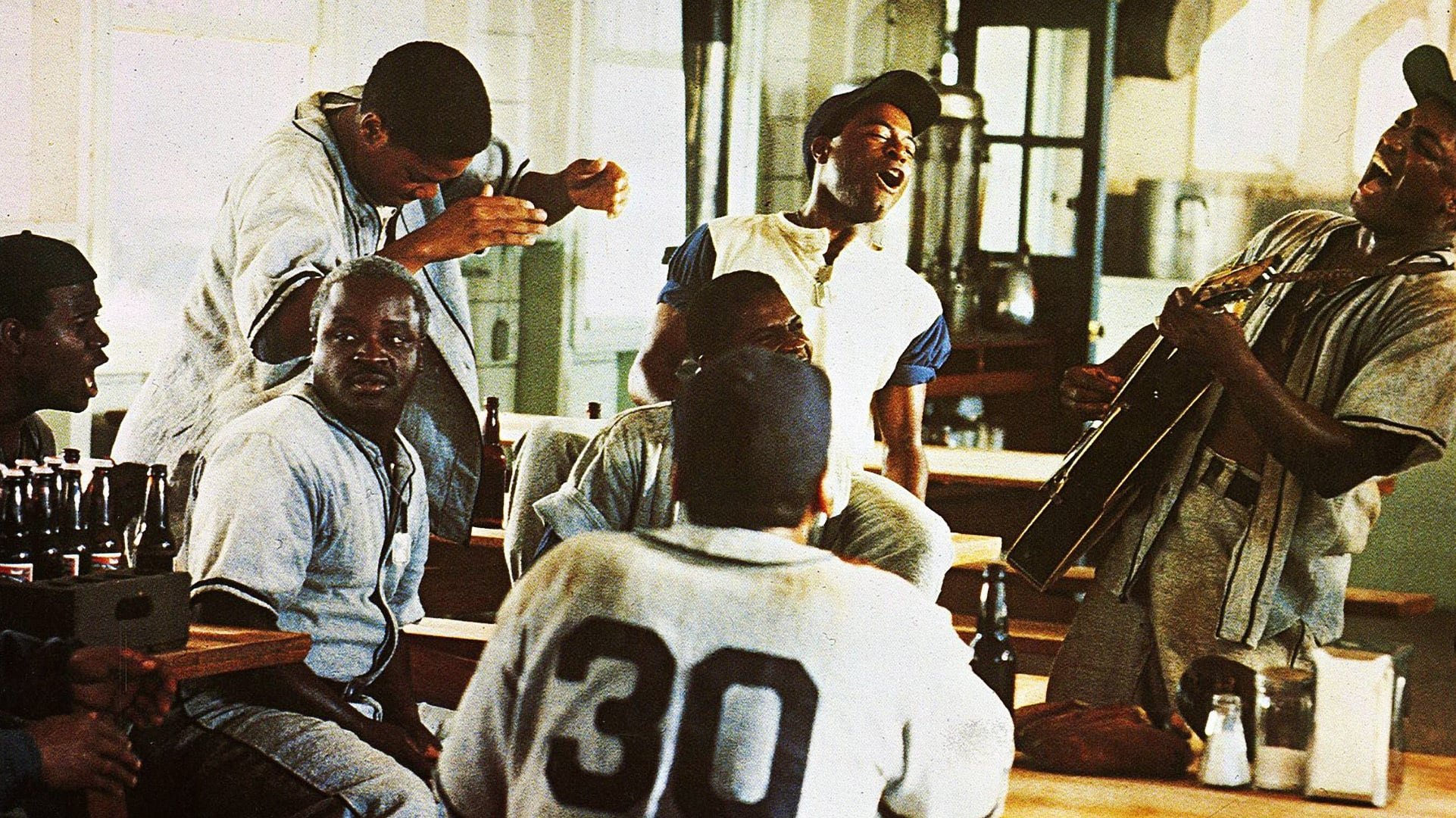
In one of the movie’s most memorable performances, Larry Riley plays “C.J. Memphis,” a Mississippi farmhand turned soldier who becomes the most unfortunate and tragic victim of Water’s malevolence. Although engaging and exceptionally talented, both musically and athletically, Memphis is obviously the most illiterate and “uncultured” soldier of Waters’ platoon, and a rube too naïve to realize that of all of the Southern soldiers, he’s the “geeche” that Waters despises most.
In addition to the movie’s intriguing drama and suspense, “A Soldier’s Story” features prime musical entertainment. Iconic R&B vocalist Patti LaBelle plays “Big Mary,” owner of a bar where the black soldiers from the army base frequent. Her mesmerizing blues/gospel singing, coupled with Riley’s own fine Mississippi Delta blues singing and guitar playing, makes for some of the movie’s most entertaining moments.
Charles Fuller, the playwright of “A Soldier’s Story” and screenwriter for this movie, did quite a fine job of transitioning his Pulitzer-Prize winning play to the big screen, and the added dimensions of cinema greatly enhances his story. However, even though the story is intended to be a “whodunit,” you’ll most likely gather who murdered Waters before it is revealed at the end of the movie.
Nevertheless, “A Soldier’s Story” is a truly compelling tale, and the magnificent performances delivered by the cast alone, a cast that would be perceived by many today as “all-star,” will have you wanting to watch this movie over and over again.
Review By: Sparky48
Conundrums.
Someone has murdered the top sergeant of an all-black Army company in the middle of World War II and a lawyer — a black lawyer, Howard E. Rollins, Jr. — is sent from Washington to investigate the case. The enlisted men in the Southern camp are all black. The officers are all white except Rollins, who is a captain. They’ve never seen an African-American officer before. In the face of all kinds of opposition from the other officers, who are either naive or racists, and overcoming the recalcitrance of the enlisted men, Rollins pushes ahead until the culprits are discovered and the case solved.The victim, Adolph Caesar, was the highest-ranking enlisted man who had seen service in France in World War I. Man, is he a complicated person. The men alternatively respect him for his spit-and-polish demands or hate him for his persecution of unsophisticated blacks from the country, the kind who play blues on the guitar and carry around Lucky Tiger balm. Caesar is short and skinny, like the early Frank Sinatra, but he’s tough as nails too and is able to clobber a much larger Denzel Washington in a bare-knuckled fist fight. Suspects abound.
It’s far from a traditional detective story though, and there are scenes of questioning, accompanied by flashbacks, but no climactic courtroom confrontation. In recent cop movies we know right away who the villains are. In the old-fashioned mysteries, Hercule Poirot or Sherlock Holmes or Philip Marlowe keep a tight rein on their judgments until the final reveal. Not here. The cool Rollins takes his job seriously — too seriously perhaps — and wants to arrest everyone seriatim upon whom suspicion happens to fall at any given moment — men and officers alike. And he’s always mistaken until the last few minutes when the miscreants give themselves away and spill the beans gratuitously, even in the absence of any evidence against them. I mean, I should say, there is not a “shred” of evidence against them except their confession. (All evidence comes in “shreds”.) The movie is never dull but it meanders around, covering baseballs games and combat exercises. Rollins strides manfully and quietly through his part, linking all these various dynamics and ancillary events, but the show belongs to Adolph Caesar as the heart-breakingly torn-up top sergeant who doesn’t know which race he owes allegiance to. That coffee-grinder voice! What a performance. He died two years after the movie was released.
The location shooting is colorful and evocative. Not just the vast emptiness of Fort Chafee, Arkansas, but the brief glimpses we get of “Tynan, Louisiana,” where the summer evenings are so hot and drenched, and the air conditioners so uninvented that people simply move their parlors and floor lamps out onto the sidewalks and fan themselves while playing checkers. Everyone glistens with sweat. Once in a while I thought I smelled body odor.
The plot, though, has its weaknesses. Nobody could describe it as taut. That’s not necessarily bad. Life itself is rarely taut. But the impression left by the film is not that art is imitating life but that the writer isn’t sure where he’s going, or how much in the way of drama and significance he can pack into the running time. And none of the white guys are particularly admirable either, though there’s plenty of diversity among the black enlisted men. Dennis Lipscomb is the white captain who is Rollins’ counterpart. He wants to get the whole thing over with as quickly and quietly as possible. The character redeems himself, but Lipscomb is not a forceful actor but rather the sort who would make a satisfactory clerk, the truculent kind who informs you that the rules preclude his complying with your request.
But, as I say, you’re very unlikely to get bored. And although the chief conundrum, which has to do with racial identity, is buried beneath a multitude of digressions, it still lends the movie a deathless power. Fortunately, though the problem still exists, it’s not as demanding as it once was. At least the now-integrated armed forces have African-American officers, and some have achieved even higher rank.
Review By: rmax304823
Other Information:
Original Title A Soldier’s Story
Release Date 1984-09-14
Release Year 1984
Original Language en
Runtime 1 hr 41 min (101 min)
Budget 6000000
Revenue 21821347
Status Released
Rated PG
Genre Crime, Drama, Mystery
Director Norman Jewison
Writer Charles Fuller
Actors Howard E. Rollins Jr., Adolph Caesar, Art Evans
Country United States
Awards Nominated for 3 Oscars. 6 wins & 9 nominations total
Production Company N/A
Website N/A
Technical Information:
Sound Mix Dolby Stereo
Aspect Ratio 1.85 : 1
Camera Panaflex Camera and Lenses by Panavision
Laboratory Metrocolor, Culver City (CA), USA (color)
Film Length N/A
Negative Format 35 mm (Eastman 125T 5247, 400T 5294)
Cinematographic Process Spherical
Printed Film Format 35 mm
Cast and characters
- Howard Rollins
- Adolph Caesar
- Art Evans
- Robert Townsend
- Denzel Washington
- David Alan Grier

Original title A Soldier's Story
TMDb Rating 6.761 134 votes
Director

Director
Cast
Similar titles