












Video Sources 0 Views
Synopsis
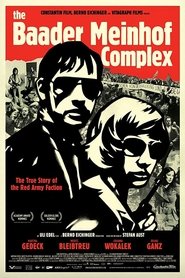
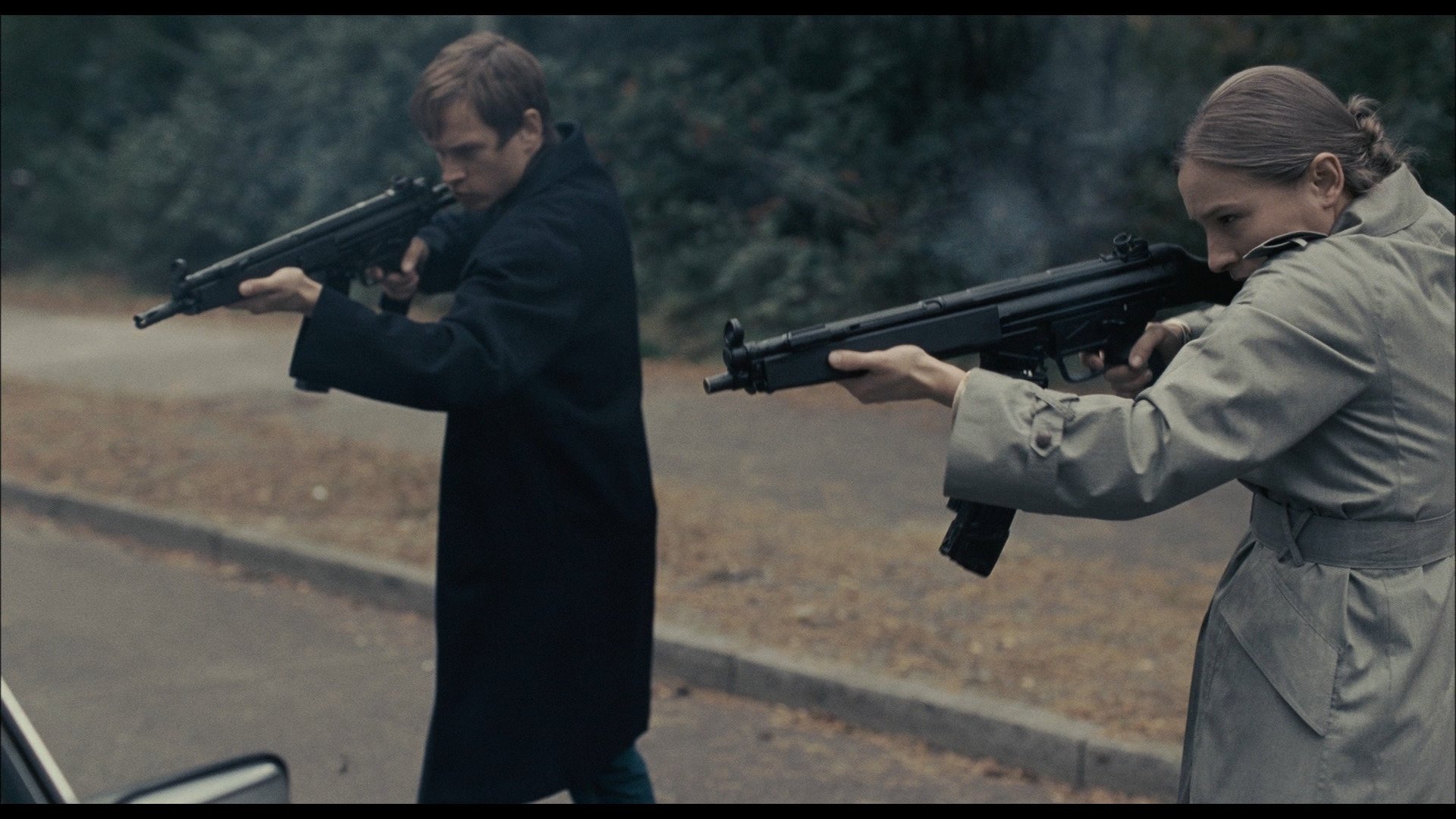
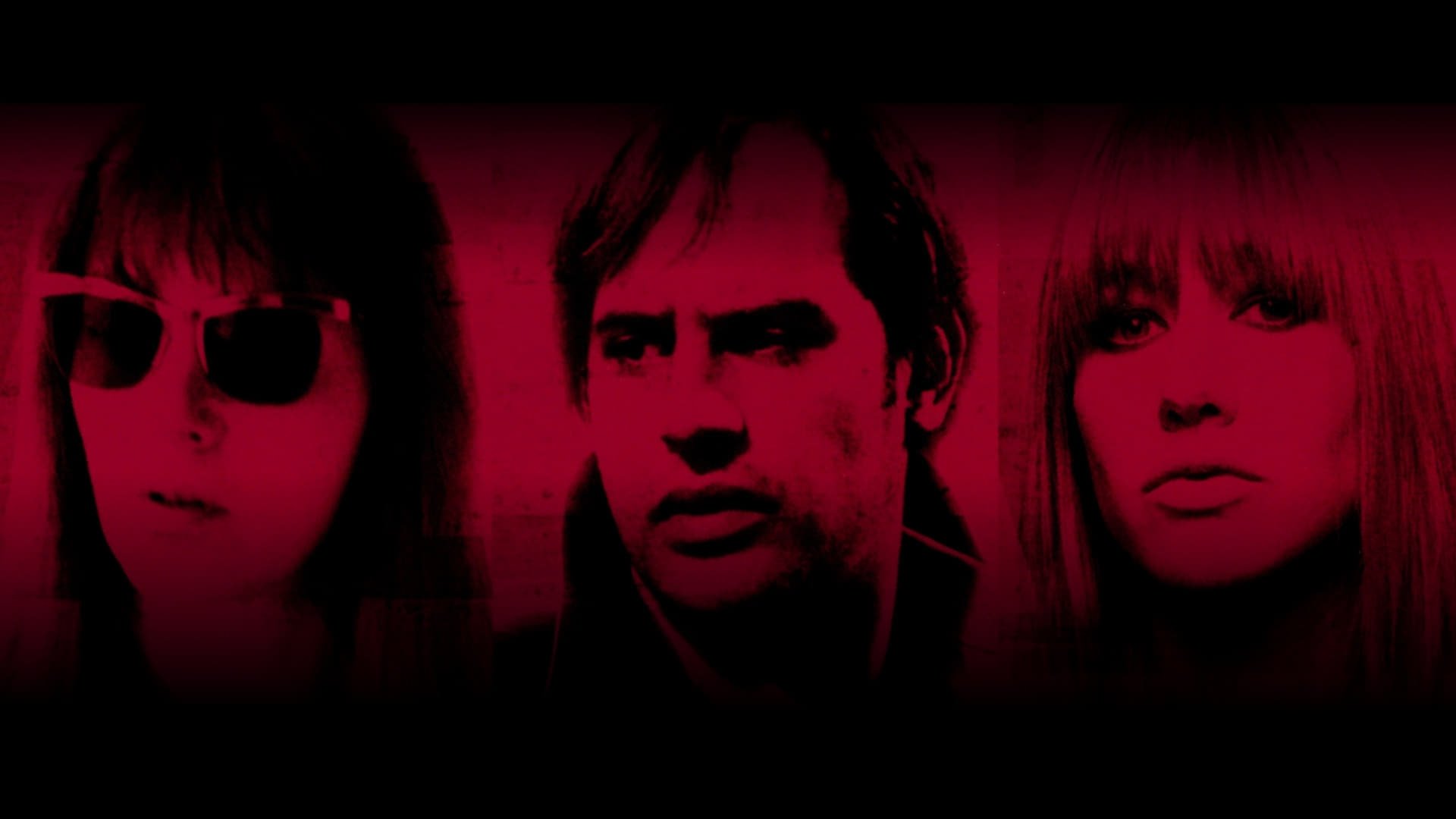
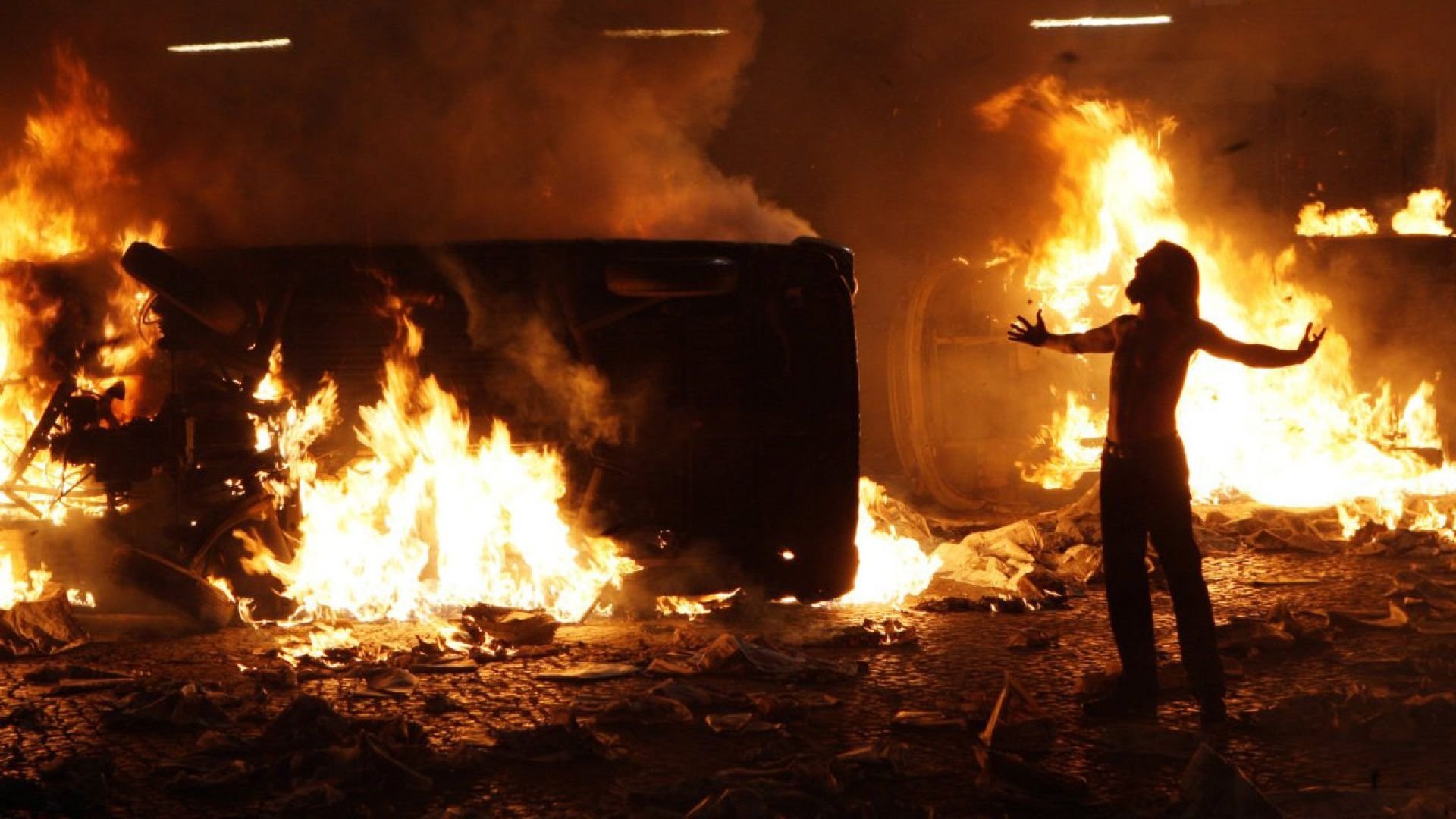
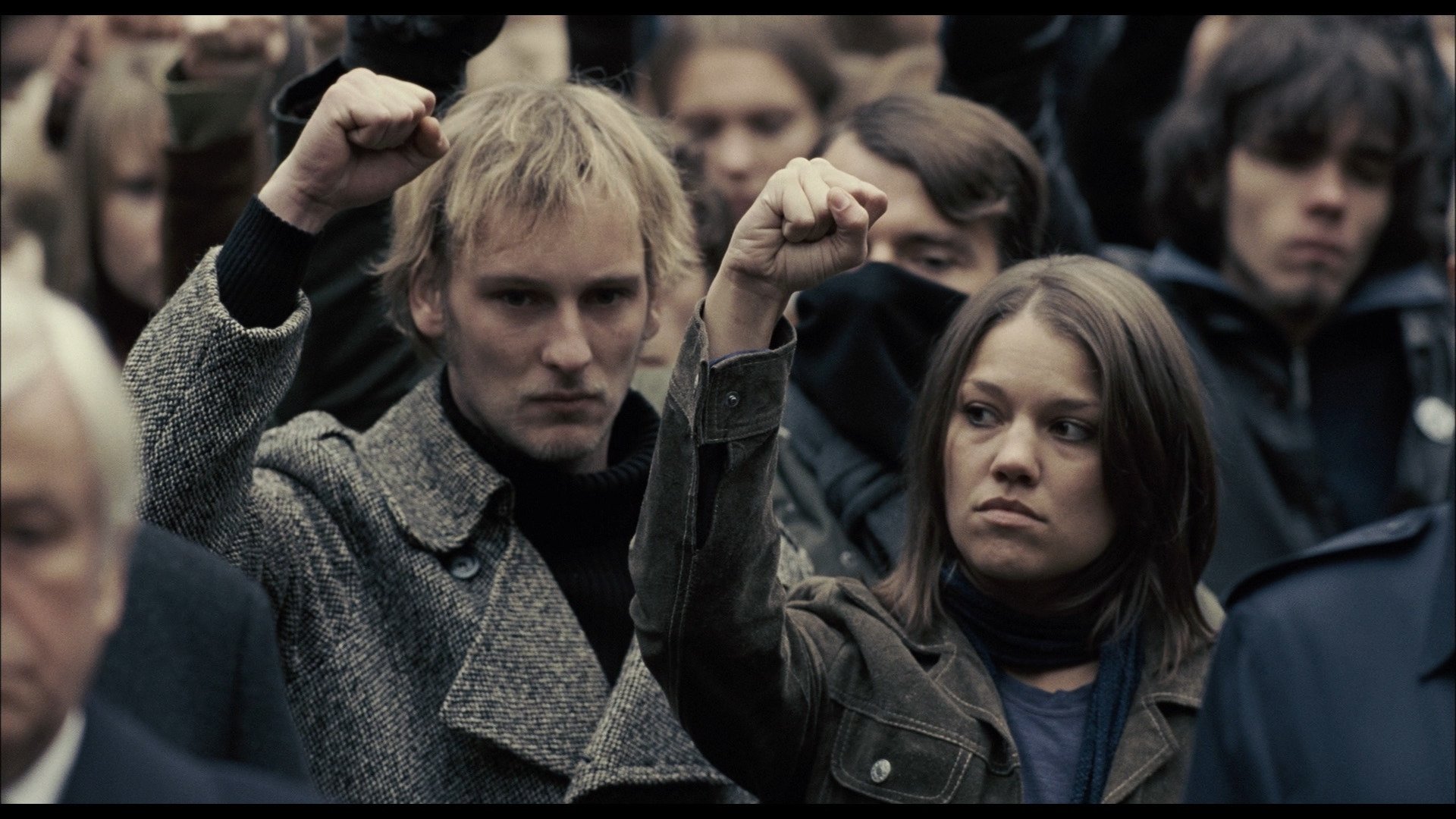
Watch: Der Baader Meinhof Komplex 2008 123movies, Full Movie Online – Germany in the 1970s: Murderous bomb attacks, the threat of terrorism, and the fear of the enemy inside are rocking the very foundations of the yet-fragile German democracy. The radicalized children of the Nazi generation led by Andreas Baader, Ulrike Meinhof, and Gudrun Ensslin are fighting a violent war against what they perceive as the new face of fascism: American imperialism supported by the German establishment, many of whom have a Nazi past. Their aim is to create a more human society, but by employing inhuman means they not only spread terror and bloodshed; they also lose their own humanity. The man who understands them is also their hunter: Horst Herold, head of the German police force. And while he succeeds in his relentless pursuit of the young terrorists, he knows he’s only dealing with the tip of the iceberg..
Plot: ‘Der Baader Meinhof Komplex’ depicts the political turmoil in the period from 1967 to the bloody “Deutschen Herbst” in 1977. The movie approaches the events based on Stefan Aust’s standard work on the Rote Armee Fraktion (RAF). The story centers on the leadership of the self named anti-fascist resistance to state violence: Andreas Baader, Ulrike Meinhof and Gudrun Ensslin.
Smart Tags: #terrorist #terrorism #dying_in_custody #female_terrorist #red_army_faction #assassination #kidnapping #bomb #political_propaganda #police_chase #injustice #anarchy #innocent_victim #banker #building_a_bomb #anti_war #capitalism #interrogation #extorting_a_confession #confession #extortion
Find Alternative – Der Baader Meinhof Komplex 2008, Streaming Links:
123movies | FMmovies | Putlocker | GoMovies | SolarMovie | Soap2day
Ratings:
 |  7.3/10 Votes: 38,390 |
 | 85% | RottenTomatoes |
 | 76/100 | MetaCritic |
 | N/A Votes: 482 Popularity: 12.857 | TMDB |
Reviews:
Another interesting German movie
Germans have a quality wave of movies that reached wold audience in the early 21st century, after the Run Lola Run hit. This movie is perhaps not the best of the best, but is interesting, original and gives a story of one turbulent era with great detail and precision.
Review By: perica-43151
Entertaining but Somewhat Empty
This film captures much of the historical tensions that existed in 60s-70s Germany (and world at large) by focusing on one of its most visible “phenomena”, the so-called Baader-Meinhof Gang, which was also called, even beyond the reign of Andreas Baader and Ulrike Meinhof, the Rote Armee Fraktion or RAF. The struggle between left-wing terrorists and the established political and state apparatus, mediated through the perception of the masses via mutual propaganda, makes for an interesting story and an important saga in Europe’s confrontation with the limits of liberal democracy, and of the populace’s flirtation with bloody acts of terror.This film tells the story in its crude general details, in the course of about 2½ hours. It focuses largely on three figures: Andreas Baader (portrayed as a rash control freak), Ulrike Meinhof (shown first as a timid reported and later a ruthless organizer of violence) and Gudrun Ensslin (the lover of Baader and a determined fanatic). Many minor characters pop in and out, and at least 4 or 5 countries are visited in the course of the group’s exile and international reach. Many shots are fired, many bombs exploded, many victims (“guilty” and “innocent”) assassinated, and many plans hatched and botched.
Overall, the film does a pretty good job at carrying the story forward at a rapid pace. At no point did I lose touch of the essentials of what’s going on. I found the movie to be eminently easy to follow and a pleasure to watch. The best part of the movie is the first half, or maybe first two-thirds, during which time the focus in on the sympathetic figureheads (Baader, Meinhof, Ensslin). By the time they are in prison, the story is driven (as it was in real life) by a new generation of fighters, who are comparably less interesting and whose motivations remain a mystery. Not only that, but I thought that the ending of the movie was highly unsatisfactory. The last half an hour of the film is a real mess. It’s not catastrophic, but it’s still a huge step-down from the well-paced storytelling of the rest of the movie.
Now, the movie can easily be faulted for being a superficial exercise in crowd pleasing. It focuses only on the barest of motivational factors. It doesn’t care for depth or subtlety. People are portrayed as one-dimensional and events flash by so fast that we don’t have time to reflect on what we see. Action is favored over thought (but maybe this aptly represents RAF’s philosophy?): there are chase scenes, gun fights, bombings, sieges and a few orgies. Overall, the movie is a loud exercise in simplistic historical narrative. For example, we get the obligatory news reels of Nixon, MLK, the War in Vietnam and the student riots of ’68… There’s nothing new to be seen or heard here. Not even the actions of the Baader-Meinhof Gruppe itself are explicated beyond what everybody who has read anything about the group already knows.
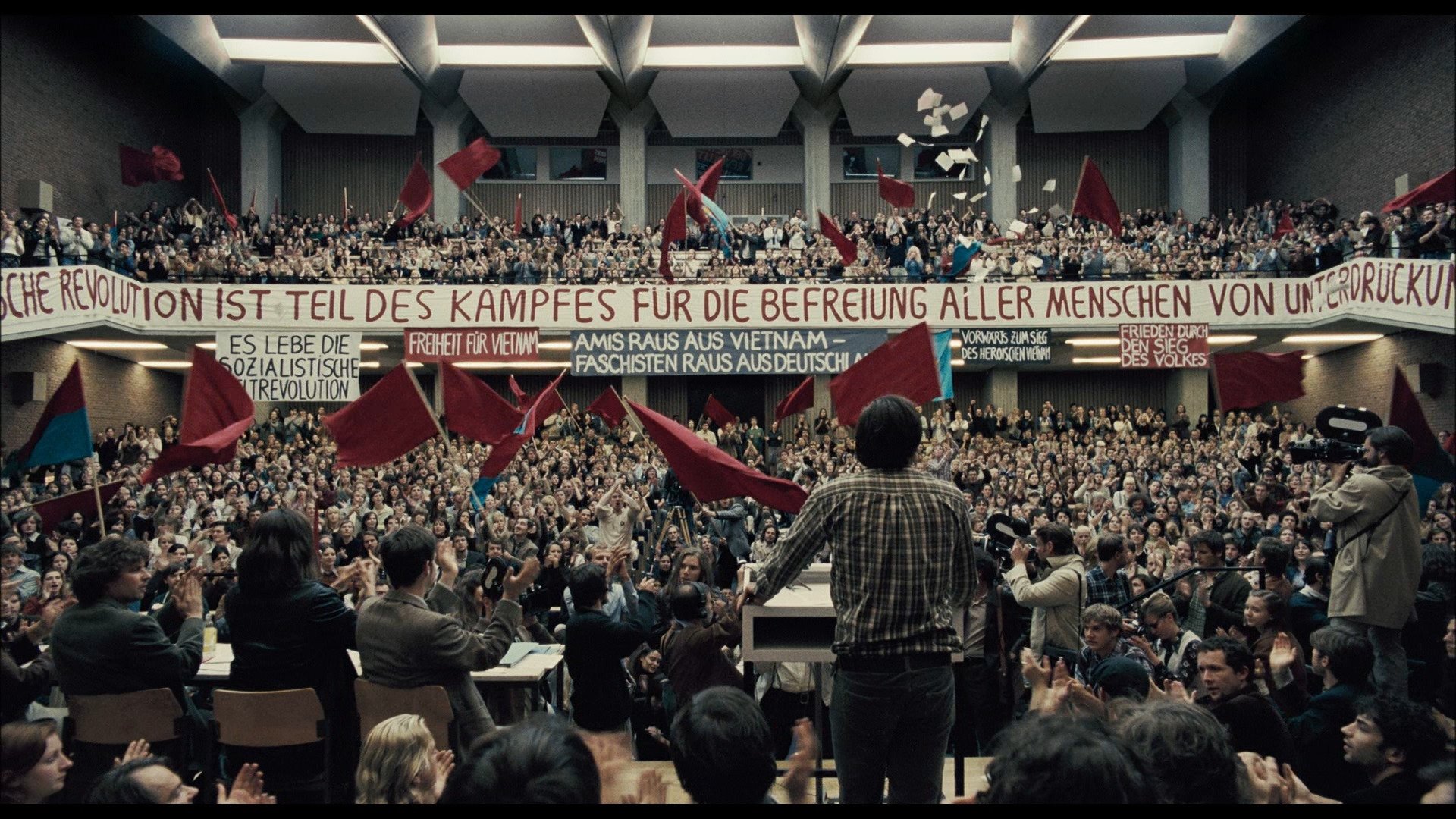
Still, there are many things that speak on behalf of the movie. For one, all the actors do a very fine job indeed. From Bruno Ganz as the head of the police hunt to all the youthful and anarchic terrorists, the cast carries the film from beginning to end. Martina Gedeck as Ulrike Meinhof does an excellent job, and her character has also been given the most depth and complexity of all the RAF members. There are a few caricatures, but mostly the failures of character development in the movie have to do with the lack of time given to each character on screen. As others have pointed out, the sheer massiveness of the scale of events and the extensiveness of the timeline means that the movie cannot delve into any particular aspect of the story at any length. The actors do a fine job, however, and all the sets look authentic: the mass rallies organized by Rudi Dutschke and the violent demonstrations between the students and the cops (all very early in the film) are very effective in depicting the mood and reality of the era. The beating of the students is a harrowing image that leaves nothing for imagination.
Speaking of the conflict between authority and rebellion, I think that the true strength of this film is precisely in its non-ideological and non-preachy tone. It offers a certain amount of reciprocal faulting between the pro- and anti-Baader-Meinhofians, and it certainly condemns the anti-civilian actions of the group, but it gives Bruno Ganz a few definite lines that summarize the essence of the conflict – something to the effect that “even while condemning, you have to understand the real causes of terrorism”. This sentiment, while hardly new or deep, is an important one in a movie that otherwise could have been turned either into a Bonnie and Clyde romance or an exercise in retrospective character assassination. And make no mistake, all these people are portrayed in less than flattering light. Still, some amount of humanity is allowed to shine through, and this is what makes the movie SLIGHTLY more than just another empty gesture in the perpetuation of a historical mythos.
It is an entertaining, and very well made movie which doesn’t offer much depth but, in its simplicity and straightforwardness, offers material in its pure density and lets the audience make up its own mind… Too bad that it ends so suddenly and unsatisfactorily as it does. That’s a shame, because the movie could have been great. Now it’s only entertaining.
Review By: K2nsl3r
Other Information:
Original Title Der Baader Meinhof Komplex
Release Date 2008-09-25
Release Year 2008
Original Language de
Runtime 2 hr 30 min (150 min), 3 hr 4 min (184 min) (extended cut), 2 hr 45 min (165 min) (TV) (2 parts) (Germany), 2 hr 45 min (165 min) (extended), 2 hr 44 min (164 min) (extended) (USA)
Budget 27000000
Revenue 0
Status Released
Rated R
Genre Action, Biography, Crime
Director Uli Edel
Writer Bernd Eichinger, Uli Edel, Stefan Aust
Actors Martina Gedeck, Moritz Bleibtreu, Johanna Wokalek
Country Germany, France, Czech Republic
Awards Nominated for 1 Oscar. 4 wins & 22 nominations total
Production Company N/A
Website N/A
Technical Information:
Sound Mix DTS, Dolby SR, Dolby Digital
Aspect Ratio 1.85 : 1
Camera Arricam LT, Zeiss Master Prime Lenses, Arricam ST, Zeiss Master Prime and Angenieux HR Lenses
Laboratory ARRI Film & TV, München, Germany
Film Length 4,087 m (Sweden), 4,102 m, 4,132 m (Portugal, 35 mm), 4,150 m (Finland)
Negative Format 35 mm (Kodak Vision2 50D 5201, Vision2 250D 5205, Vision2 500T 5260)
Cinematographic Process Digital Intermediate (2K) (master format), Super 35 (3-perf) (source format)
Printed Film Format 35 mm (spherical) (Kodak Vision 2383)
Cast and characters
- Martina Gedeck
- Moritz Bleibtreu
- Johanna Wokalek
- Nadja Uhl
- Stipe Erceg
- Niels-Bruno Schmidt




Original title Der Baader Meinhof Komplex
TMDb Rating 6.977 482 votes
Director

Director
Cast
Similar titles